About
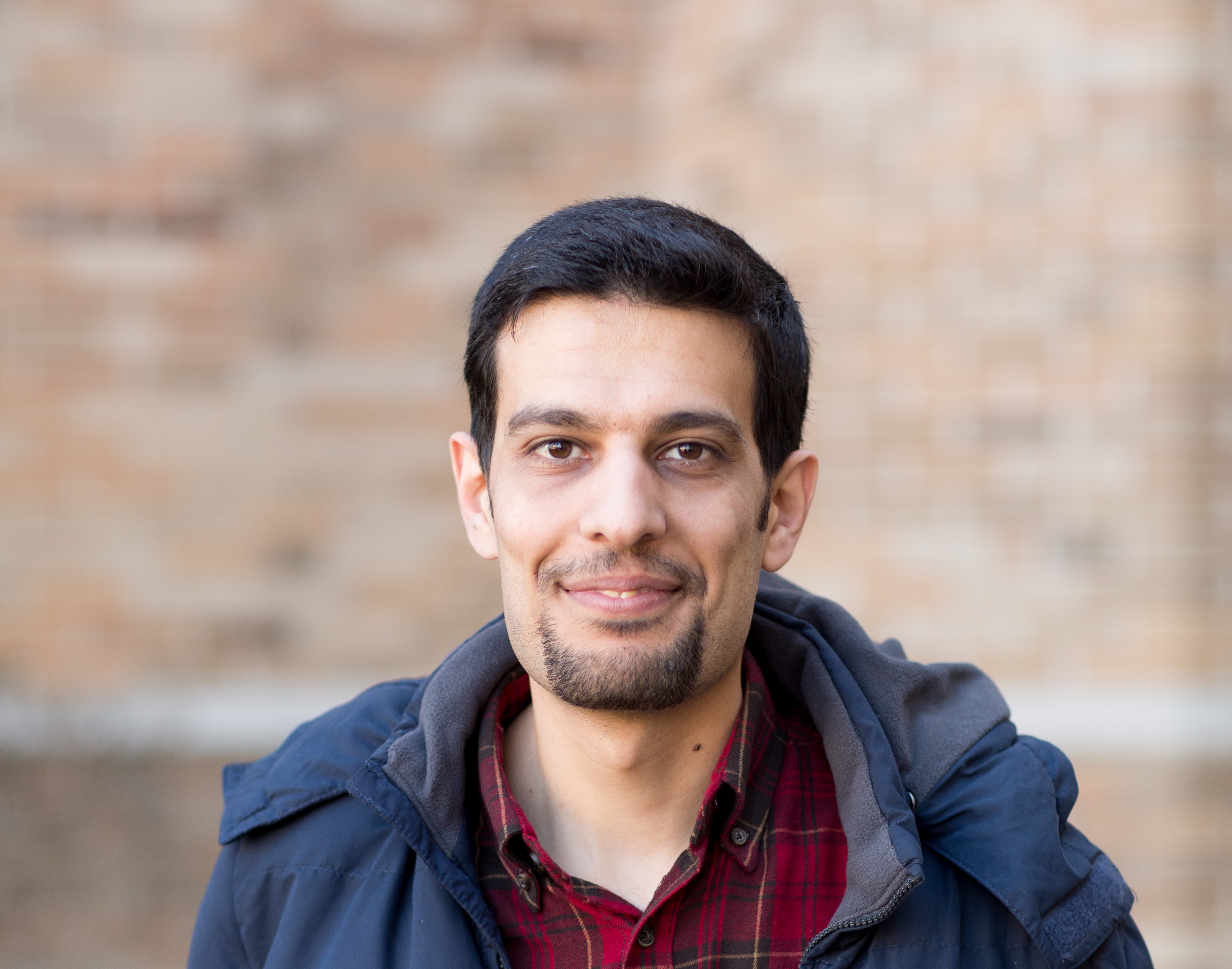
- You never forget cold weather after living in South Bend for two years :)
Hi — I’m Moeen Mostafavi, a Postdoctoral Research Associate at the University of Virginia School of Data Science. My research develops and applies machine learning, natural language processing, and vision-language models to understand human behavior, improve decision support, and build more reliable AI systems for social, clinical, and organizational settings.
My current work focuses on editable and reliable vision-language models, with applications in dermatology and clinical AI. I am especially interested in methods that allow deployed models to be updated, audited, and improved over time while maintaining fairness and reliability across diverse populations and real-world contexts.
I earned my Ph.D. in Systems & Information Engineering from the University of Virginia. My dissertation, Enhancing Emotion Understanding in Messaging Interactions, integrated transformer-based language models with Affect Control Theory to study affective meaning, emotion, and social dynamics in digital communication. This line of work led to a 2024 article in Sociological Methodology on contextual embeddings for sociological research.
Before my current postdoctoral role, I worked as an Investment Officer at the Virginia Retirement System (VRS), where I applied machine learning, statistical modeling, and large-scale data analysis to mortgage-backed securities, fixed-income research, forecasting, and risk analysis. This industry experience strengthened my interest in building AI and data-science methods that are not only technically sound, but also useful in high-stakes decision-making environments.
Across my research and applied work, I combine methodological interests in NLP, computational social science, applied machine learning, and decision support with domain collaborations in health, finance, safety, and social systems. My projects have included emotion modeling in online communication, political analytics, telematics-based fleet safety, RFID and haptic-feedback systems for collision prediction in contact sports, LoRaWAN-based environmental sensing, and large-scale analytics for institutional investment.
I also care deeply about inclusive, hands-on teaching and mentoring. At UVA, I supported courses in Exploratory Text Analytics, Statistical Modeling, Data Mining, and Business Analysis, working with students across engineering, data science, and business programs. My teaching emphasizes practical, accessible learning through annotated notebooks, short technical primers, real-world datasets, and flexible mentoring structures that help students from diverse backgrounds succeed.
I am currently interested in academic roles in data science, computational social science, NLP/AI, information science, human-centered AI, and interdisciplinary programs where I can combine machine learning research with applied work in social, health, and decision-support systems.
Links:
• Google Scholar: https://scholar.google.com/citations?user=BtO9RngAAAAJ&hl=en
• LinkedIn: https://www.linkedin.com/in/moeenmostafavi
• Selected publications:
– Sociological Methodology article: https://journals.sagepub.com/doi/abs/10.1177/00811750241260729
– UMAP paper: https://dl.acm.org/doi/abs/10.1145/3450613.3459661
– IEEE SysCon (emoji/embeddings): https://ieeexplore.ieee.org/abstract/document/9447137
– IEEE SysCon (campaign metrics): https://ieeexplore.ieee.org/abstract/document/9483746
– AHFE (RFID + haptics): https://link.springer.com/chapter/10.1007/978-3-030-80091-8_47
– Alzheimer’s & Dementia (sleep tech): https://alz-journals.onlinelibrary.wiley.com/doi/abs/10.1002/alz.038831